
Design-build is becoming more important as homeowners look for smoother remodeling experiences. When planning a renovation or whole-home update, choosing the right construction method can make a major difference in time, cost, and stress levels.
Many homeowners are not aware that there are two primary construction approaches. Understanding the difference helps you choose the right path from the start.
This guide explains the key design-build advantages and how this method compares to the traditional approach.
Traditional Construction vs. Design-Build
Before exploring the advantages, it helps to understand how the two methods differ.
What Is the Traditional Construction Method?
In the traditional method, the homeowner hires:
- A designer or architect
- A separate general contractor
- Sometimes multiple subcontractors independently
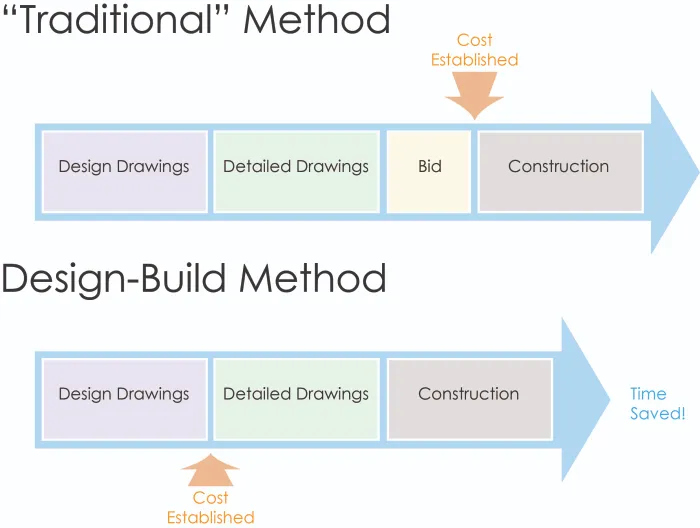
The design is completed first. Then contractors bid on the finished plans. Construction begins after a contractor is selected.
While this method works, it often creates gaps between design and construction.
What Is the Design-Build Method?
In the design-build model, one company handles both:
- Design
- Construction
The designer and builder work under the same organization, sharing responsibility for the final result.
This structure creates alignment from the first consultation through the final walkthrough.
Why Homeowners Prefer the Design-Build Method
There are several clear design-build advantages that make this approach appealing for residential remodeling projects.
One-Stop Responsibility
One of the strongest design-build advantages is having a single organization responsible for the entire project.
What this means for homeowners
- One contract
- One team
- One point of contact
- Clear accountability
Instead of managing separate designer and contractor teams, communication stays centralized.
This reduces confusion about who is responsible for decisions or mistakes.
Better Communication From Start to Finish
Communication breakdowns are common in traditional construction.
In design-build, the team collaborates internally. This creates:
- Fewer misunderstandings
- Faster decisions
- Smoother project flow
Because the design and construction teams work together daily, they can resolve issues before they become problems.
Time Savings Through Overlapping Phases
Design-build often shortens the overall project timeline.
How time savings happen
- No competitive bidding stage
- Construction planning begins during design
- Certain construction phases can start before final design details are complete
For example, structural work or demolition can begin while cabinetry details are finalized.
This approach reduces idle time between phases.
Cost Control Is a Major Design-Build Advantage
Budget surprises are one of the biggest stress points in remodeling.
Design-build helps control costs in several ways.
Real-Time Budget Feedback
In the traditional method, a designer may create plans without full awareness of construction costs. Once bids come in, the homeowner may learn the design exceeds the budget.
This often leads to:
- Redesign fees
- Delays
- Frustration
In design-build, budget and design are developed together. Cost feedback happens in real time.
Fewer Change Orders
When the builder is involved during design, potential construction issues are identified early.
This reduces:
- Unexpected site conflicts
- Last-minute structural changes
- Costly mid-project revisions
Fewer surprises mean fewer change orders.
Financial Alignment Between Teams
In traditional projects, designers and contractors operate separately.
In design-build, both teams share financial responsibility for the project’s success. This creates internal motivation to:
- Protect the budget
- Maintain quality
- Deliver on schedule
The team succeeds together.
Improved Risk Management
Another major design-build advantage is reduced project risk.
Because the same team handles both design and construction:
- Errors are identified earlier
- Liability is clearer
- Accountability is unified
This protects homeowners from being caught between separate companies blaming each other.
Streamlined Project Management
Design-build simplifies coordination.
Instead of managing multiple contracts and schedules, homeowners work with one organized system.
This structure supports:
- Clear timelines
- Coordinated subcontractors
- Faster approvals
- Centralized documentation
The process becomes more predictable.
Quality Control Throughout the Process
When design and construction operate together, quality improves.
Design intent is protected because the builder understands the reasoning behind decisions.
This prevents common issues such as:
- Substituted materials
- Misinterpreted drawings
- Compromised finishes
Consistency improves the final product.
Design Flexibility Without Delays
Design changes are sometimes necessary.
In traditional construction, even small adjustments can restart bidding or trigger new pricing rounds.
In design-build:
- Adjustments are priced quickly
- Teams coordinate internally
- Timeline impact is minimized
This flexibility keeps projects moving.
Side-by-Side Comparison Table
| Factor | Traditional Method | Design-Build Method |
| Contracts | Multiple | Single |
| Communication | Separate teams | Unified team |
| Budget Feedback | After bidding | During design |
| Timeline | Linear process | Overlapping phases |
| Accountability | Shared between firms | Centralized |
| Risk of Delays | Higher | Lower |
When Design-Build Works Best
Design-build is especially effective for:
- Whole home renovations
- Home additions
- Complex remodels
- Projects with tight timelines
- Homeowners who want clear accountability
For larger or more detailed projects, the benefits increase.
Are There Situations Where Traditional Construction Works?
Yes.
Traditional construction may work well for:
- Simple projects
- Fully completed architectural plans
- Owners who prefer separate roles
However, many homeowners prefer the streamlined approach of design-build.
How Design-Build Supports Whole Home Renovations
Whole-home remodeling requires careful coordination across:
- Structural work
- Mechanical systems
- Interior finishes
- Layout changes
Having one team oversee everything reduces risk and improves continuity.
Design-build advantages become even more noticeable as project complexity increases.
Final Thoughts on Design-Build Advantages in Bucks County, PA
The design-build method simplifies construction by bringing design and building together under one roof. It supports better communication, stronger budget control, faster timelines, and clearer accountability.
For homeowners seeking fewer surprises and a smoother remodeling experience, the design-build approach offers practical benefits that traditional construction often cannot match.
Professional Design-Build Services in Bucks County, PA
For homeowners interested in the real design-build advantages in Bucks County, PA, Aslan Design & Build offers a fully integrated approach that brings design and construction together under one team. From the first consultation and in-home visit to the final walkthrough, their process focuses on clear communication, transparent pricing, and detailed planning before construction begins.
Their team manages everything from layouts and material selections to permitting and construction, giving homeowners one point of contact throughout the project. By balancing design vision with budget awareness at every stage, they help reduce surprises, protect timelines, and deliver results that feel cohesive and intentional.
If you are planning a renovation and want to experience the benefits of a unified design-build process, a consultation with Aslan Design & Build can help you explore how this approach supports smoother, more predictable outcomes.