
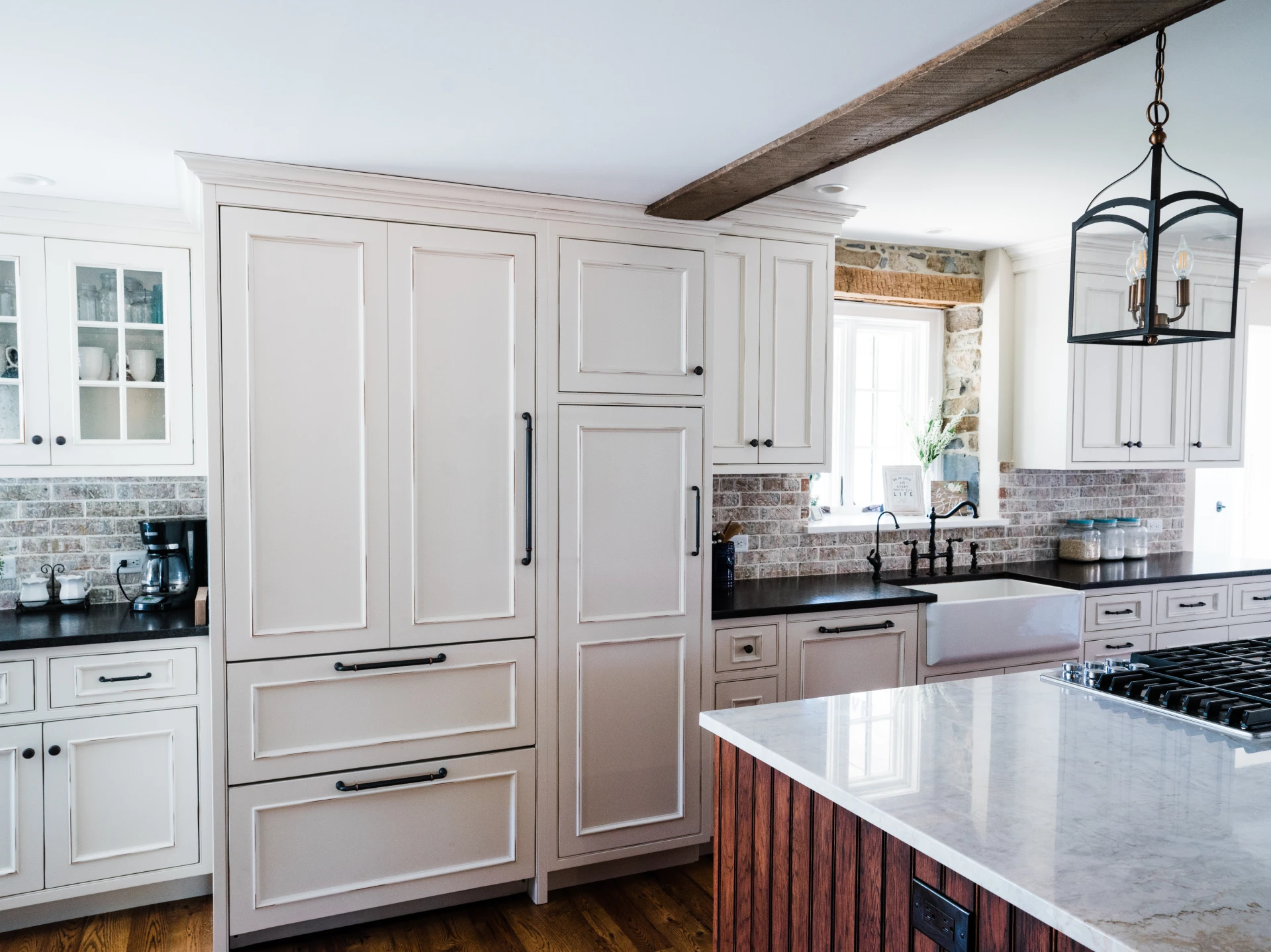
The kitchen used to be a separate room where one person cooked while the rest of the family gathered elsewhere. That era has passed. Today’s families want to cook, eat, and spend time together in the same open space.
A family room-kitchen combo transforms how you live in your home. You can prepare dinner while watching your children do homework at the kitchen island. You can host gatherings where guests flow naturally between the cooking area and the seating space. You can keep an eye on the living room while managing multiple tasks in the kitchen.
This shift toward open-concept living is not just a design trend. It reflects how modern families actually want to live. The question is not whether to create a family room-kitchen combo but how to do it right. In our 18+ years of designing and building homes across Bucks County, we have seen firsthand how this transformation impacts families’ daily lives and their long-term satisfaction with their homes.
The Appeal of an Open-Concept Family Room Kitchen
Creating a unified family room-kitchen space offers several practical and emotional benefits that go beyond aesthetics. These are the benefits we hear most frequently from homeowners in Doylestown, Newtown, and Yardley who have completed this renovation.
Better Supervision and Connection
When your kitchen opens directly into your family room, you maintain visual connection with everyone in the space. Parents can supervise children while preparing meals. You can include family members in cooking tasks rather than isolating yourself in a separate room.
This is particularly valuable for families with young children. We have designed dozens of family room kitchen combos specifically to address this need, and the feedback is consistent: parents feel more connected to their families while managing the kitchen. Our interior design expertise ensures that the space functions beautifully for your family’s lifestyle.
More Functional Living Space
An open-concept layout makes your home feel larger and more functional. Natural light flows throughout the space. Air circulation improves. The combined square footage creates a more versatile area that can accommodate larger gatherings and different activities simultaneously.
In older Bucks County homes, this benefit is especially pronounced. Many homes built in the 1970s and 1980s have compartmentalized layouts that feel cramped and disconnected. Opening the kitchen to the family room fundamentally changes how the home functions. This is similar to the transformations we achieve with our whole home remodeling projects.
Increased Home Value
Homes with open-concept family room kitchen combinations appeal to modern buyers and typically command higher resale values than homes with closed-off, compartmentalized layouts. This design choice is an investment in both your lifestyle and your home’s future value.
Our experience shows that this renovation consistently delivers strong resale value, particularly in the Bucks County market where buyers actively seek modern, open-concept layouts. Learn more about our kitchen remodeling services and how we maximize your investment.
Flexibility for Different Lifestyles
Whether you are a young family with small children, empty nesters who entertain frequently, or multi-generational households, an open-concept layout adapts to your needs. The space can be configured for different purposes depending on your current lifestyle.
The Reality of Family Room Kitchen Combos: Why Most Homeowners Get It Wrong
Here is what we see happen repeatedly: A homeowner decides to remove the wall between their kitchen and family room. They watch design shows, browse Pinterest, and become convinced it is a straightforward project. They hire a general contractor who gives them a low bid.
Then, during demolition, the contractor discovers the wall is load-bearing. Or the ventilation system is inadequate. Or the electrical panel is located in the wall that needs to be removed. Suddenly, the project cost doubles, the timeline extends by months, and the homeowner is frustrated and exhausted.
This happens because the project was designed without input from the people who would actually build it. The design looked beautiful on screen, but it was not grounded in structural and mechanical reality.
This is exactly why we developed our design-build process. After years of seeing homeowners struggle with this renovation, we recognized that the traditional approach (hire a designer, then hire a builder) simply does not work for a project this complex. Discover how our proven process ensures your project succeeds.
Design Considerations for Family Room Kitchen Combos
Creating a successful family room-kitchen combo requires thoughtful planning across multiple dimensions. This is where many homeowners encounter challenges if they work with separate designers and builders. At Aslan Design & Build, we address each of these considerations during the design phase, not during construction.
Layout and Flow
The transition between the kitchen work zone and the family room seating area must feel natural and functional. The kitchen should not feel like an island in the middle of the living space. Instead, it should integrate seamlessly while maintaining its own identity.
This requires careful consideration of traffic patterns. Where do people naturally move through the space? How do you prevent the cooking area from feeling cramped or exposed? How do you define different zones without walls?
Our NKBA-certified designers have designed hundreds of open-concept kitchens. We understand the nuances of traffic flow, sightlines, and spatial definition that make a family room-kitchen combo feel intentional rather than chaotic. Explore our kitchen design services to see how we create functional, beautiful spaces.
Ventilation and Air Quality
Removing a wall between the kitchen and family room changes how cooking odors and moisture disperse throughout your home. A closed kitchen naturally contains cooking smells. An open-concept kitchen requires a more powerful ventilation system to pull cooking odors and steam away from the family room.
Many homeowners discover this challenge too late, after construction is complete. The solution is planning the ventilation system during the design phase, not after the wall is removed.
We have learned this lesson through experience. We have seen homeowners deal with inadequate ventilation in their new open-concept kitchens, and we have committed to never letting this happen to our clients. During the design phase, we specify the ventilation system based on the size of the combined space, the appliances being installed, and the cooking patterns of the family. This attention to detail is part of our comprehensive kitchen remodeling approach.
Electrical and Plumbing Layout
The kitchen requires significantly more electrical outlets and circuits than a typical family room. When you combine these spaces, you need to carefully plan where outlets are located to serve both the kitchen work area and the family room seating area.
Similarly, if your kitchen island includes a sink or wet bar, plumbing must be run beneath the floor or through the island base. This requires coordination with structural elements and careful planning during the design phase.
Our electricians and plumbers are part of our in-house team, not subcontractors. This means they are involved in the design process from the beginning. They identify constraints and opportunities that independent contractors would miss. They ensure that the design is not just beautiful but also practical and code-compliant. This integrated approach is central to our design-build methodology.
Structural Considerations
If the wall between your kitchen and family room is load-bearing, removing it requires engineering and the installation of a beam to support the weight above. This is not a simple demolition project. It requires professional assessment, proper engineering, and careful installation.
Many homeowners do not discover whether a wall is load-bearing until demolition begins. By then, it is too late to plan properly. A design-build firm assesses structural conditions during the design phase, preventing costly surprises.
We always conduct a structural assessment during the initial design phase. If a wall is load-bearing, our structural engineer sizes the appropriate beam and calculates the cost during design. This means there are no surprises when construction begins. This proactive approach is similar to how we handle complex home additions and whole home remodeling projects.
How the Aslan Design-Build Process Solves Family Room Kitchen Combo Challenges
Our design-build process is specifically structured to address the complexity of family room kitchen combos. Here is how we ensure your project succeeds.
Phase 1: Discovery and Assessment
We begin with an in-depth consultation where we understand your goals, lifestyle, and vision. We conduct a thorough assessment of your space, including structural evaluation, mechanical systems assessment, and identification of any challenges specific to your home.
For older Bucks County homes, this assessment is critical. We look for non-standard framing, outdated electrical systems, plumbing in unexpected locations, and other conditions that might impact the project. We do this before design begins, not during construction.
Phase 2: Integrated Design Development
Our NKBA-certified designers work directly with our project managers, electricians, plumbers, and structural engineers to create a comprehensive design. This is not a design created in isolation and then handed to builders. It is a design that has been vetted by the people who will build it.
We create 3D visualizations so you can see exactly what your space will look like. More importantly, we provide accurate cost estimates based on the actual requirements of your specific home and design.
Phase 3: Pre-Construction Planning
Once the design is finalized, our team handles all permitting, material ordering, and construction scheduling. We prepare detailed specifications for every trade. We coordinate with suppliers to ensure materials arrive on schedule.
This phase is where our experience becomes evident. We have built hundreds of family room-kitchen combos. We know exactly what materials are needed, how long each phase takes, and where problems typically arise. We plan accordingly. See our portfolio to view completed projects that demonstrate our attention to detail and execution excellence.
Phase 4: Construction and Project Management
During construction, your dedicated project manager oversees all work, coordinates the trades, and keeps you informed of progress. Because the design and construction teams are integrated, any challenges discovered during construction are addressed collaboratively.
We maintain a strict schedule and quality standards. Our in-house team ensures that the work meets our standards, not just minimum code requirements.
Phase 5: Final Walkthrough and Closeout
Once construction is complete, we conduct a detailed final walkthrough. We address any punch-list items immediately. We ensure that every detail meets your expectations and our standards.
Common Mistakes in Family Room Kitchen Combos (And How We Prevent Them)
Learning from others’ experiences can help you avoid costly errors in your own project. These are the mistakes we see most frequently and how our design-build process prevents them.
Mistake 1: Removing a Load-Bearing Wall Without Proper Engineering
This is the most common and most expensive mistake. Homeowners remove a wall thinking it is non-load-bearing, only to discover during construction that it supports the structure above. The wall must be replaced with a properly engineered beam, adding significant cost and time to the project.
We prevent this by conducting a structural assessment during the design phase. Our structural engineer evaluates every wall that will be removed. If it is load-bearing, we engineer the solution and include the cost in your estimate. This comprehensive assessment is part of our kitchen design process.
Mistake 2: Inadequate Ventilation Planning
Homeowners create an open-concept kitchen without planning for adequate ventilation. After construction, cooking odors permeate the entire home. The solution is retrofitting a more powerful ventilation system, which is expensive and disruptive.
We prevent this by involving our HVAC specialist during design. We specify the ventilation system based on your specific space and cooking patterns. We ensure that the system is properly sized and installed during construction. Learn more about how our interior design expertise addresses these technical considerations.
Mistake 3: Poor Electrical Planning
Outlets are placed in inconvenient locations because electrical planning was not coordinated with the design. Homeowners end up using extension cords and power strips, creating safety hazards and visual clutter.
Our electricians are part of the design team. They identify where outlets should be located based on appliance placement, island configuration, and family room needs. The design reflects practical electrical reality, not just aesthetic preferences.
Mistake 4: Ignoring Plumbing Constraints
If an island includes a sink or wet bar, plumbing must be carefully routed. Homeowners sometimes discover that the ideal island location is not feasible because of plumbing constraints discovered during construction.
Our plumbers are involved in design. If you want an island with a sink, we confirm that plumbing can be routed to that location. We identify any constraints early and adjust the design accordingly.
Mistake 5: Losing the Kitchen’s Identity
In an effort to create an open-concept space, some homeowners lose the kitchen’s functional identity. The cooking area becomes too exposed or cramped. Proper design maintains the kitchen’s functionality while creating a visual connection to the family room.
Our NKBA-certified designers understand kitchen functionality. We create designs that are both beautiful and practical. The kitchen maintains its identity while connecting visually to the family room.
What Sets Aslan Design & Build Apart
We have been designing and building homes in Bucks County for over 18 years. We have completed hundreds of kitchen remodels and dozens of family room-kitchen combos. This experience informs every decision we make.
We are NKBA and NARI certified, reflecting our commitment to professional standards and ongoing education. We invest in our team, our processes, and our relationships with suppliers and trades.
Most importantly, we are committed to transparency and collaboration. We involve you in every decision. We provide accurate cost estimates upfront. We communicate regularly throughout the project. We stand behind our work.
When you choose Aslan Design & Build for your family room kitchen combo, you are choosing a firm that understands the complexity of this renovation and has the expertise to execute it flawlessly.
Planning Your Family Room Kitchen Combo
If you are considering this renovation, here are the key steps to ensure a successful outcome.
Step 1: Assess Your Space and Goals
Begin by honestly evaluating your current kitchen and family room. What do you love about your home? What frustrates you? How do you actually use these spaces? Do you entertain frequently? Do you have young children who need supervision?
Your answers to these questions should drive your design decisions. A family room-kitchen combo designed for frequent entertaining looks different from one designed for a family with young children.
Step 2: Understand Structural Realities
Before you fall in love with a design, you need to know whether the wall you want to remove is load-bearing. This requires a structural assessment. If the wall is load-bearing, you need to understand the engineering requirements and cost implications before proceeding.
We can conduct this assessment during an initial consultation, providing you with realistic information before you invest in detailed design work.
Step 3: Plan Mechanical Systems
Ventilation, electrical, and plumbing must be planned carefully for an open-concept space. Work with professionals who understand how these systems interact with your design goals.
For example, if you want a kitchen island with a sink, you need to plan how plumbing will be routed. If you want powerful ventilation without a visible range hood, you need to plan for a downdraft system or concealed ductwork. These decisions should be made during design, not discovered during construction.
Step 4: Consider Zoning and Definition
Even in an open-concept space, you can create subtle definition between zones. Different flooring materials can define the kitchen area. A change in ceiling height can separate the cooking space from the seating area. Strategic lighting can create visual boundaries without walls.
These design choices help the space feel intentional rather than chaotic.
Step 5: Plan for Bucks County Home Realities
If your home is older, you may discover surprises during construction. Outdated electrical wiring may need to be replaced. Plumbing may be in unexpected locations. Structural framing may be non-standard.
We are familiar with Bucks County homes in Doylestown, Newtown, and Yardley. We anticipate these challenges and plan accordingly. We have seen the full range of older home conditions, and we know how to address them. Our experience with whole home remodeling in older homes gives us the expertise to handle any challenge.
Frequently Asked Questions
Can I create a family room-kitchen combo in an older Bucks County home?
Yes. Older homes can be successfully renovated to include open-concept family room-kitchen combinations. However, they often present unique challenges such as non-standard framing, outdated electrical systems, or unexpected structural conditions. We have extensive experience with older Bucks County homes and know how to address these challenges during the design phase.
What if the wall between my kitchen and family room is load-bearing?
If the wall is load-bearing, it must be replaced with a properly engineered beam. This adds cost and complexity to the project, but it is absolutely necessary for structural safety. We assess this during the design phase and factor the cost into your estimate.
How do I prevent cooking odors from spreading throughout my home?
Proper ventilation is essential. A powerful range hood or downdraft system should be installed during the renovation. The ductwork should be sized appropriately and routed to the exterior. This planning should happen during design, not after construction begins. We specify the ventilation system based on your specific space and cooking patterns.
What is the typical timeline for a family room-kitchen combo renovation?
The timeline depends on the scope of work and whether structural changes are required. A typical project takes 3 to 6 months from design through completion. We provide a detailed schedule during the pre-construction phase.
How much does a family room-kitchen combo cost?
The cost depends on the size of the space, the materials you choose, and whether structural changes are required. We provide accurate cost estimates during the design phase based on your specific goals and home conditions.
Should I hire a designer and builder separately or use a design-build firm?
A design-build firm offers significant advantages for a complex project like a family room-kitchen combo. We provide integrated design and construction, accurate cost estimation, streamlined communication, and fewer surprises during construction. The investment in a design-build approach typically pays for itself through avoided change orders and faster completion.
What makes Aslan Design & Build different from other contractors?
We have been designing and building homes in Bucks County for over 18 years. We are NKBA- and NARI-certified. Our team includes in-house designers, electricians, plumbers, and project managers who collaborate throughout the process. We are committed to transparency, quality, and customer satisfaction. Most importantly, we have the experience to handle the complexity of a family room-kitchen combo project.