
Key Points:
- Basement remodels recoup approximately 71% of costs at resale, making them a solid investment when planned strategically.
- A semi-finished approach focuses your effort on the zones you will actually use.
- The most important step in any basement project is addressing moisture and waterproofing before adding any finishes.
Basement Remodeling Ideas for Better ROI
Many homeowners view their unfinished basement as wasted potential. The space sits dark and cluttered, filled with storage boxes and mechanical systems. Yet the idea of a complete basement renovation feels overwhelming, with no guarantee of fully recouping the investment.
The good news is that you do not need to finish your entire basement to create valuable, usable space. A semi-finished approach allows you to strategically upgrade specific zones while maintaining flexibility and keeping the project manageable. By the end of this guide, you will understand how to plan a basement project that delivers both immediate livability and strong financial returns.
Why Semi-Finished Basements Make Financial Sense
Before discussing design ideas, it is important to understand the financial reality of basement remodeling. According to the 2025 Cost vs. Value Report published by the Journal of Light Construction, basement remodels recoup approximately 71% of their costs at resale. This is a respectable return, though not always the highest compared to other home improvements.
However, the ROI calculation changes when you consider a semi-finished approach instead of a full basement renovation. A complete basement finish involves extensive drywall, insulation, drop ceilings, and finished flooring throughout the entire space. A semi-finished approach focuses your effort on the zones you will actually use while leaving other areas unfinished or minimally finished.
This strategy delivers several advantages. First, the scope of work is reduced because you are not finishing every square foot. Second, you retain the flexibility to expand or modify the space later without tearing out existing work. Third, utilities remain accessible, making future repairs and upgrades much simpler.
How to Address Waterproofing and Moisture Control
No basement project should begin with design ideas or material selections. Instead, it must start with a critical assessment of moisture and water management. Many homeowners make the costly mistake of finishing a basement without properly addressing water issues, only to discover mold and damage within a few years.
Waterproofing typically involves installing sump pumps, perimeter drainage systems, and ensuring proper exterior grading to direct water away from the foundation. While this work can feel like a big commitment upfront, skipping it often leads to far more extensive problems later.
Beyond structural waterproofing, ongoing moisture control is essential. Dehumidifiers help maintain proper humidity levels, preventing condensation and mold growth. For semi-finished basements where portions remain open to the foundation, applying waterproof sealers to concrete walls is a practical way to protect against moisture while brightening the space.
How to Plan Your Zones and Maximize Your Budget
The key to a successful semi-finished basement is creating clearly defined zones with intentional boundaries. Rather than attempting to finish the entire space uniformly, identify the specific areas where you will spend the most time and focus your effort there.
A common approach is to finish one or two primary zones while leaving the remainder minimally finished. For example, you might fully finish a recreation room or home office in one section while leaving the utility area, mechanical room, and storage zones more basic.
This zoned approach offers multiple benefits. Your effort is concentrated where it matters most, and you avoid overbuilding areas that primarily serve as storage or utility space. It also makes future upgrades easier, since unfinished areas can be completed later without undoing previous work.
Best Budget-Friendly Finishing Strategies for Basements
Once you have identified your finished zones and addressed moisture concerns, strategic material choices can make a big difference without sacrificing functionality or appearance. The key is understanding where to invest in quality and where to keep things simple.
For flooring in your finished zones, durable and easy-to-maintain materials work best. Options that allow for individual replacement are especially useful in basements, where moisture can occasionally be a concern.
For walls, paint-grade paneling or sealed concrete can provide a clean, finished appearance without the need for full drywall installation. Waterproof coatings can also help protect surfaces while improving the overall look of the space.
The ceiling deserves special attention because it can significantly impact both cost and accessibility. Instead of installing a full drop ceiling, many homeowners choose to paint exposed joists and mechanical systems in a neutral color. This creates a modern, intentional look while keeping everything accessible for future maintenance.
Popular Uses for Semi-Finished Basements
The beauty of a semi-finished basement is its versatility. Different homeowners prioritize different uses based on their lifestyle and family needs.
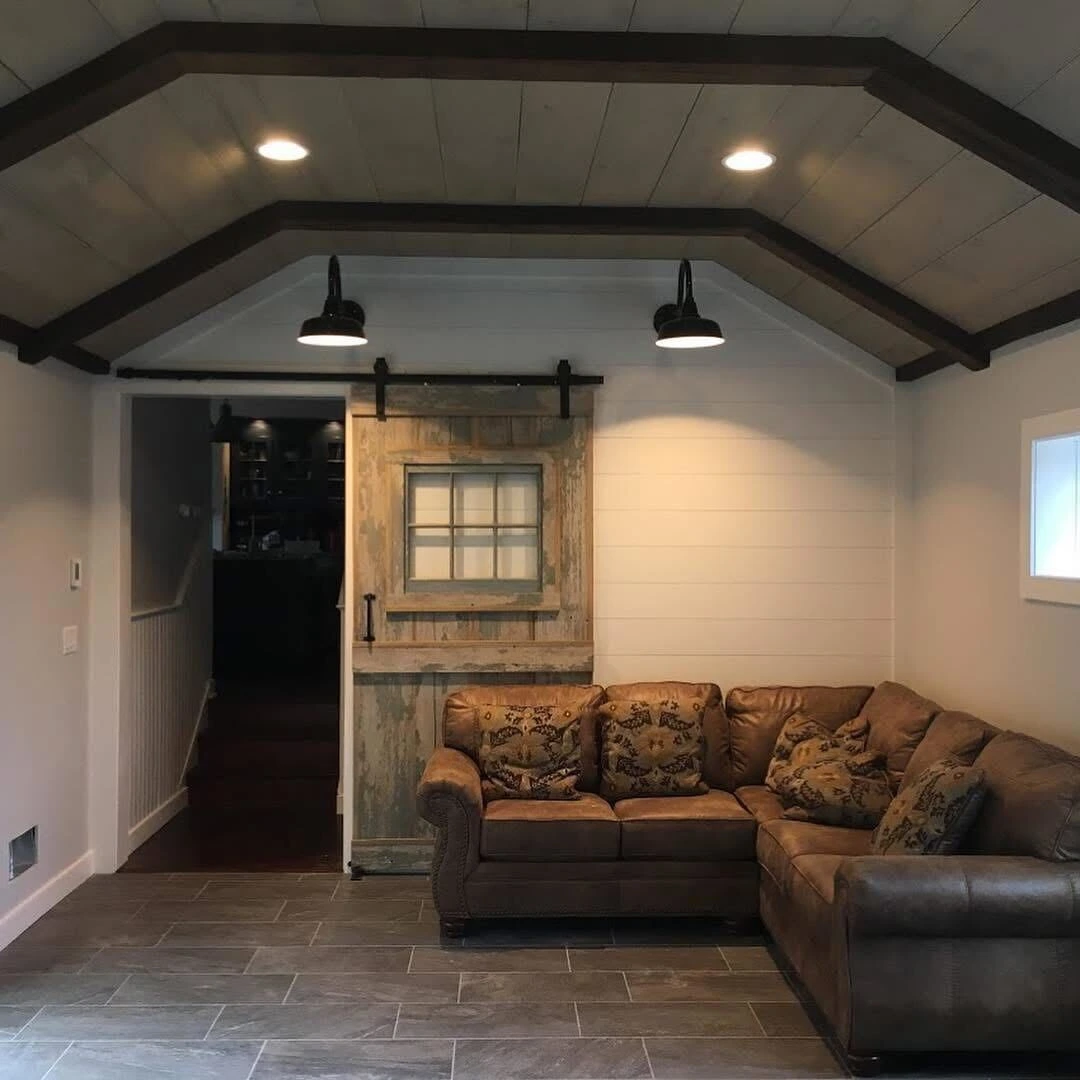
A recreation room or family gathering space is one of the most popular uses. This area benefits from good lighting, comfortable seating, and a more finished feel.
A home office or workspace has become increasingly valuable, especially for remote work. A basement office offers a quiet, dedicated environment away from the main living areas.
A laundry room or utility nook can be created with simple partitioning, helping organize essential systems without requiring high-end finishes.
Storage zones can remain largely unfinished, with sealed floors and painted walls. Adding shelving keeps everything organized while maintaining a practical, low-maintenance space.
Understanding Building Codes and Basement Requirements
Before beginning any basement project, understanding local building codes and permit requirements is essential. Basement bedrooms, for example, require egress windows that meet specific safety standards.
Electrical work must be completed by a licensed professional and brought up to current code requirements. Older basements often need updates to ensure safety and functionality.
Plumbing and gas lines must have proper clearances and access for maintenance. If you are planning to add features like a bathroom or kitchenette, these requirements become even more important. Consulting with a professional early helps avoid delays and ensures compliance.
When to Work with a Professional Remodeler
While some aspects of basement finishing can be handled as DIY projects, foundational work such as waterproofing, electrical upgrades, and structural changes should be handled by experienced professionals. At Aslan Design & Build, we specialize in transforming basements into functional, valuable spaces that improve how you live in your home.
We begin every project with a detailed assessment, then help you create a phased plan that delivers immediate usability while allowing for future expansion. This approach ensures your basement works for your current needs while staying adaptable over time.
If you are ready to unlock your basement’s potential, schedule a consultation and start planning a space that adds both comfort and long-term value to your home.
Frequently Asked Questions About Basement Remodeling
Can I add a bathroom to my semi-finished basement?
Yes, but it requires careful planning and professional installation. Plumbing must be properly sized and vented, and all work must meet building codes. In some cases, additional systems may be required to move wastewater efficiently.
What is the difference between a semi-finished and fully finished basement?
A fully finished basement completes the entire space, while a semi-finished basement focuses on the areas you will actively use, leaving other sections more basic. This approach offers flexibility and easier future upgrades.
Do I need a permit to finish my basement?
Yes, most areas require permits, especially when electrical, plumbing, or structural work is involved. Permits ensure the project meets safety and code requirements.
Can I finish my basement in phases?
Absolutely. A phased approach is one of the biggest advantages of a semi-finished basement, allowing you to expand the space over time as your needs evolve.