
Key Points:
•Minor kitchen remodels currently offer the highest return on investment of any interior home project, recouping over 110% of costs at resale.
•Strategic storage solutions like ceiling-height cabinetry, pull-out pantries, and toe-kick drawers can double the usable space in a compact kitchen.
•Updating layout flow, lighting, and finishes can make a small footprint feel significantly larger without the need for structural additions.
Why Small Kitchens Deserve Smart Design
A small kitchen can quickly become a source of daily frustration when storage is limited and counter space is non-existent. Many homeowners assume that the only solution is an expensive home addition to expand the footprint. However, knocking down walls or pushing out the foundation is rarely the most effective or economical approach.
Through smart design strategies and innovative storage solutions, a compact kitchen can become highly functional and visually stunning. By the end of this guide, you will understand the design techniques that maximize every square inch of your kitchen. You will also discover why remodeling a smaller space is often one of the smartest financial investments you can make in your home.
The Surprising Financial Advantage of Small Kitchens
When planning a kitchen renovation, homeowners often worry that a smaller space will not yield a strong return on investment. The data tells a completely different story. According to the 2025 Cost vs. Value Report published by the Journal of Light Construction, minor kitchen remodels currently offer an exceptional return on investment.
In fact, minor kitchen updates recoup approximately 113% of their cost at resale, making them the highest-yielding interior project available.
This means that a strategic, well-executed update to a small kitchen often pays for itself entirely, and then some, when it comes time to sell.
Conversely, major upscale kitchen remodels that involve extensive structural changes and luxury materials typically recoup only about 36% of their cost.
This data clearly demonstrates that working within your existing footprint and focusing on smart, impactful upgrades is the most financially sound approach to kitchen remodeling.
Strategic Layouts for Compact Spaces
The foundation of any successful small kitchen is a highly efficient layout. In compact spaces, the traditional “work triangle” between the sink, stove, and refrigerator must be optimized to eliminate wasted steps. The galley layout remains one of the most efficient designs for narrow spaces, allowing for parallel counters that keep everything within arm’s reach.
If your kitchen is open on one side, a peninsula can often provide more functional workspace and storage than a small, cramped island. A peninsula creates a natural boundary for the kitchen while offering a dedicated prep zone and potential seating.
For L-shaped or U-shaped kitchens, the focus must be on maximizing corner space. Traditional deep corners often become dead zones where items are lost and forgotten. Modern solutions like advanced corner carousels or articulated pull-out shelving ensure that every cubic inch of these difficult areas remains accessible and useful.
Maximizing Vertical Storage
When horizontal space is limited, the only direction to go is up. One of the most effective strategies for small kitchens is extending cabinetry all the way to the ceiling. This eliminates the awkward, dust-collecting gap above standard cabinets and provides valuable storage for infrequently used items like holiday platters or specialized small appliances.
Open shelving can also play a strategic role in compact kitchens. While entirely open storage can feel cluttered if not meticulously maintained, replacing one section of upper cabinets with floating shelves can visually open up the room. This prevents the space from feeling top-heavy while keeping everyday items easily accessible.
Do not overlook the space below the counters. Traditional base cabinets with fixed shelves are highly inefficient, requiring you to dig through the front to reach the back. Replacing lower doors with deep, full-extension drawers allows you to view and access the entire contents from above, dramatically increasing usable storage capacity.
Innovative Space-Saving Solutions
Modern cabinetry design offers brilliant solutions specifically engineered for small spaces. Pull-out pantry columns, which can be as narrow as six to nine inches, provide incredible storage density for canned goods, spices, and dry ingredients. These vertical pull-outs utilize awkward gaps between appliances or at the end of cabinet runs.
Another overlooked area is the space directly behind the cabinet doors. Adding mounted racks for cutting boards, cleaning supplies, or pot lids frees up valuable shelf space. Some homeowners even utilize toe-kick drawers—shallow compartments built into the baseboard area—to store flat items like baking sheets or serving trays.
Appliance selection also plays a crucial role. Opting for counter-depth refrigerators prevents the appliance from protruding into the walkway and disrupting the visual flow. For very tight spaces, high-quality compact appliances, such as 18-inch dishwashers or combination microwave-convection ovens, provide full functionality without dominating the room.
The Power of Light and Color
Visual perception is just as important as physical square footage in a small kitchen. Light, reflective surfaces bounce illumination around the room, creating an illusion of expansiveness. This does not mean your kitchen must be entirely white; soft neutrals, warm woods, and even strategic bold colors can work beautifully if balanced correctly.
Lighting design is critical in compact spaces. A single overhead fixture often casts harsh shadows that make the room feel smaller. A layered approach combining recessed ceiling lights, under-cabinet task lighting, and decorative pendants creates depth and dimension.
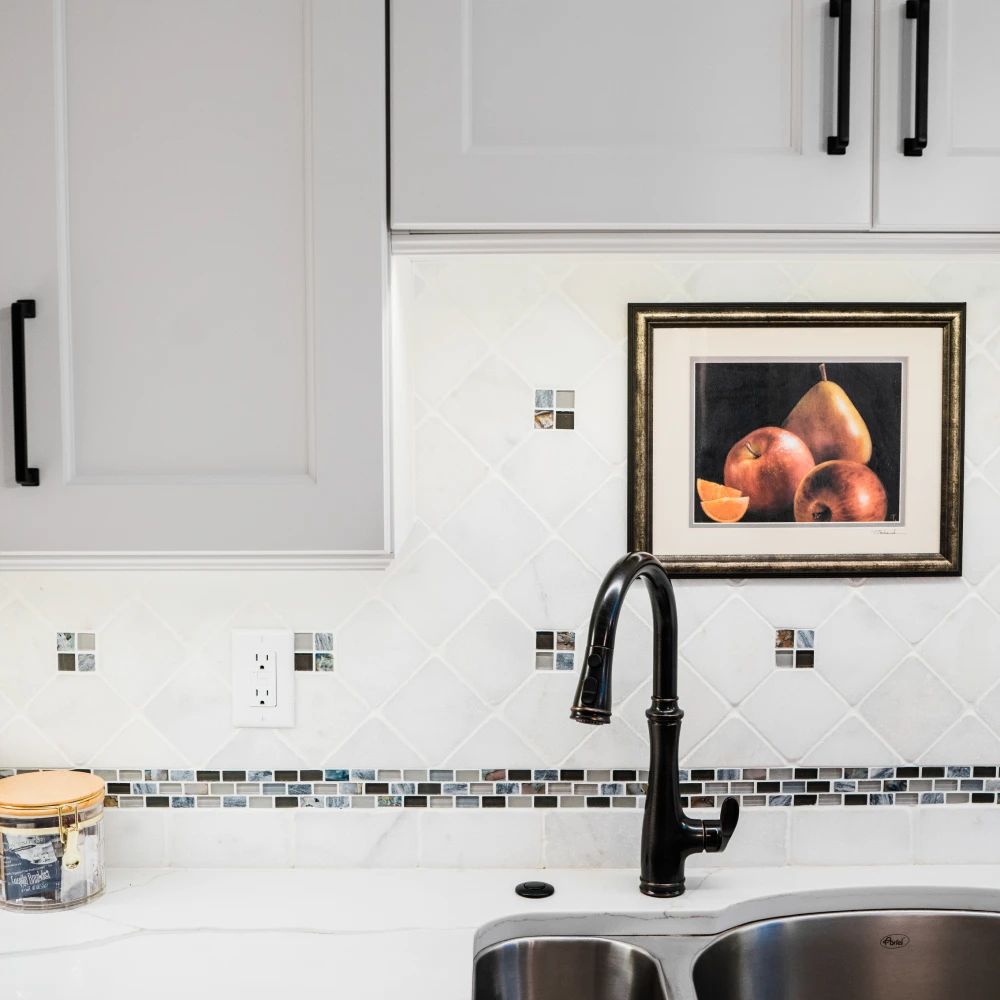
Under-cabinet lighting is particularly effective because it illuminates the darkest corners of the countertops, making the entire workspace feel brighter and more inviting. Reflective backsplashes, such as glossy subway tile or subtly mirrored finishes, further amplify both natural and artificial light.
When to Consult a Design-Build Professional
Maximizing a small kitchen requires precise planning and execution. A difference of a few inches can determine whether a cabinet door can fully open or if a specific appliance will fit. This level of detail often benefits from professional expertise.
At Aslan Design & Build, our team specializes in optimizing challenging spaces. We use advanced 3D modeling to help you visualize exactly how different layouts and storage solutions will function before construction begins. We manage every aspect of the project, from structural assessments to custom cabinetry installation.
If you are tired of fighting your small kitchen and are ready to explore its true potential, we invite you to schedule a consultation. Together, we can design a space that works perfectly for your lifestyle while adding significant value to your home.
Frequently Asked Questions About Small Kitchen Remodels
Can I add an island to my small kitchen?
Adding an island depends entirely on your available clearance. You generally need a minimum of 36 to 42 inches of walkway space on all sides of an island for it to be functional and safe. If your space cannot accommodate this, a peninsula or a mobile prep cart is often a much better solution.
What is the best color for a small kitchen?
While light colors like soft whites, warm creams, and pale grays naturally make a space feel larger and more open, you do not have to avoid color entirely. Many successful small kitchens use darker colors on base cabinets to ground the space while keeping upper cabinets and walls light to maintain an airy feel.
How long does a minor kitchen remodel take?
Because minor remodels typically retain the existing layout and avoid major structural or plumbing changes, they are usually completed much faster than major renovations. Depending on the scope of work and material availability, these projects can often be completed in a matter of weeks rather than months.