
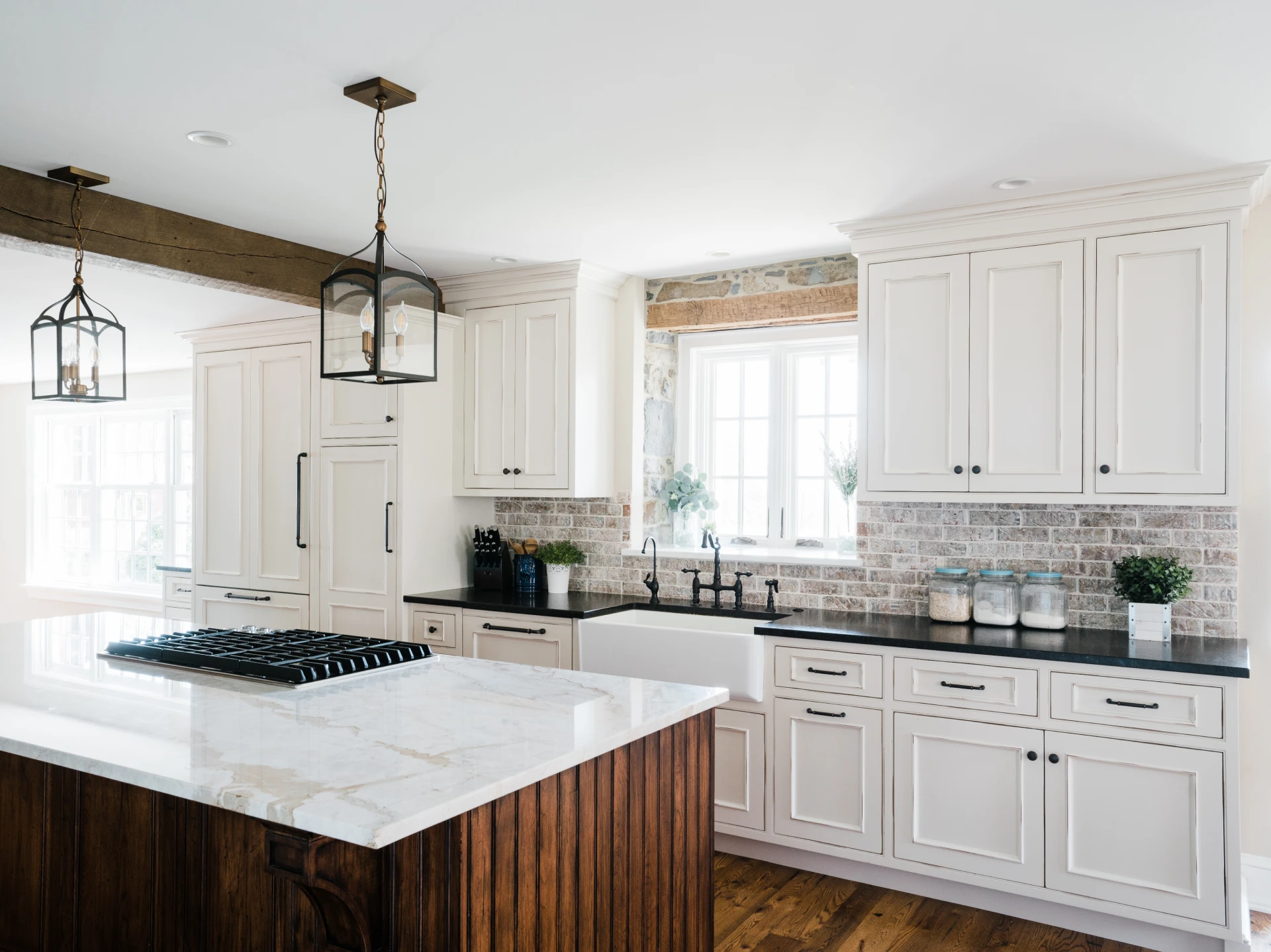
A kitchen remodeler can help you decide between an open concept and a traditional kitchen layout, but knowing the differences first will make planning easier. Choosing the right layout affects how you live, how you entertain, and how your kitchen flows with the rest of your home.
Both open concept and traditional kitchens have benefits and drawbacks. The best choice depends on your lifestyle, how you use your space, and what fits your home’s character.
This guide compares open concept and traditional kitchen layouts and helps you decide which works best for your Bucks County home.
What Is an Open Concept Kitchen?
Open concept kitchens remove walls between the kitchen and nearby living spaces like the dining room or family room.
In open concept designs:
- Rooms flow into each other
- Sight lines are wide and unobstructed
- Cooking and socializing happen together
Open layouts are common in modern remodeling and are often chosen for their social qualities.
What Is a Traditional Kitchen Layout?
A traditional kitchen keeps more defined room boundaries.
In traditional layouts:
- The kitchen is its own room
- Walls separate cooking from other spaces
- Each area has a distinct purpose
This design was more common in older homes and still works well for many families.
Open Concept vs Traditional Kitchen: Key Differences
Understanding these differences helps you picture daily life in each layout.
Interaction and Flow
Open Concept
Open layouts allow interaction across spaces.
You can cook while talking to people in the living room or dining area.
This makes the open concept ideal for:
- Families who entertain
- Homes with frequent gatherings
- People who like social cooking
Traditional Layout
Traditional kitchens are more self-contained.
They help keep smells, noise, and mess separate from living areas.
This layout works well for:
- People who prefer defined spaces
- Homes that value quiet and order
- Those who entertain less often
Visual Space and Light
Open Concept
Open concept kitchens feel larger because walls do not block sight lines.
Natural light travels more freely between rooms.
This can benefit:
- Smaller homes
- Kitchens with limited windows
Traditional Layout
Defined walls can block light and sight lines.
However, the kitchen feels more private and cozy.
This works well if you want a focused cooking area.
Design and Storage Flexibility
Open kitchens often have:
- Larger islands
- Less upper wall space
- More seating areas
Traditional kitchens may offer:
- More wall cabinets
- Nooks for appliances
- Dedicated storage spaces
Each layout supports storage differently.
Noise and Activity Control
Open spaces can let kitchen noise travel to living areas.
Traditional kitchens keep sound more contained.
This matters if:
- You cook while others are watching TV
- You want separated quiet spaces
How to Choose the Right Layout for Your Home
Choosing between open concept and traditional depends on how you use your space.
Here are key questions to consider.
How Do You Use Your Kitchen?
- Do you cook and entertain at the same time?
- Do you need separate spaces for kids’ homework or work?
- Do you prefer quiet while cooking?
Your answers point toward the layout that matches your daily use.
What Is Your Home’s Architectural Style?
Open concepts often work well in:
- Modern homes
- Homes with natural light
- Large, flowing spaces
Traditional layouts fit best when:
- Rooms are separated naturally
- Historic or classic styles are part of the home
- Walls support the home’s structure
Do You Entertain Often?
Open layouts help hosts stay connected with guests.
Traditional kitchens may feel more formal or work-focused.
What About Resale Value?
In Bucks County, many buyers like open floor plans.
However, some buyers also appreciate a traditional, well-designed kitchen.
Understanding local market trends helps guide the choice.
Pros and Cons of Each Kitchen Layout
The table below summarizes key advantages and drawbacks.
| Feature | Open Concept Kitchen | Traditional Kitchen |
| Spacious Feel | High | Moderate |
| Interaction | Excellent | Limited |
| Wall Storage | Limited | Strong |
| Privacy | Low | High |
| Natural Light Spread | High | Moderate |
| Noise Control | Low | High |
Common Remodeling Changes for Each Layout
Open Concept Remodeling
To convert to an open concept layout, you may:
- Remove one or more walls
- Add a support beam
- Install a large island
- Improve flow between rooms
These changes often require structural work and planning.
Traditional Kitchen Remodeling
To enhance a traditional layout, homeowners may:
- Update cabinets and storage
- Improve lighting
- Add a breakfast nook or built-in seating
- Choose finishes that feel warm and intentional
Traditional updates focus on function and detail.
How a Kitchen Remodeler in Bucks County, PA Can Help
A local professional helps you weigh pros and cons based on your home and lifestyle.
A kitchen remodeler can:
- Evaluate structural feasibility
- Suggest layout improvements
- Balance design, storage, and flow
- Coordinate construction details
Their experience with local homes and building codes helps avoid surprises.
Which Layout Is Right for You?
There is no one-size-fits-all answer. Both open concept and traditional layouts have strong appeal.
Open concept kitchens enhance light, flow, and social connection.
Traditional kitchens offer defined spaces and controlled activity.
The right choice depends on how you live, entertain, and use your space every day.
Professional Support for Kitchen Remodeling in Bucks County, PA
For homeowners planning a kitchen update, working with a trusted kitchen remodeler in Bucks County, PA can make the process smoother and more satisfying. A design-build team like Aslan Design & Build helps homeowners explore layout options, compare open concept and traditional plans, and choose solutions that fit both lifestyle and budget.
Their team provides design guidance, material recommendations, and project coordination from start to finish, ensuring decisions align with your goals. If you are considering a kitchen remodel in Bucks County, PA, and want personalized recommendations on layout and design, a consultation can help you take the next step with confidence.